The Small Ritual That Closes a Day
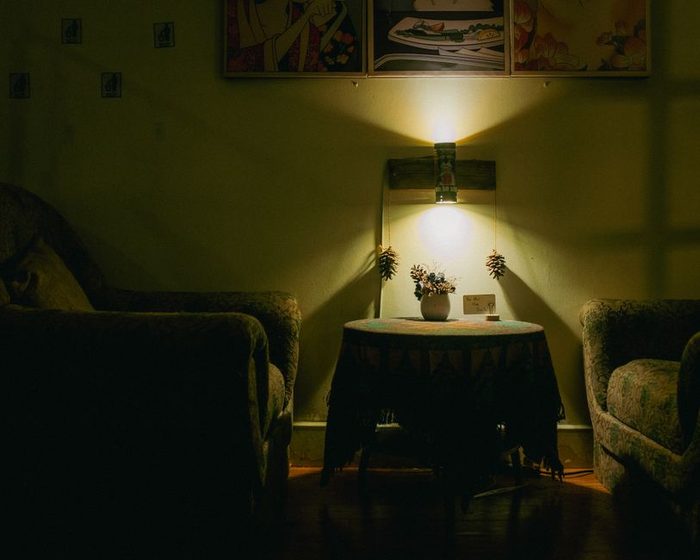
Most days don't end. They just stop happening. The laptop lid closes because it's late, not because the work reached a natural edge. The last text gets sent, the last tab gets skimmed, and then somehow it's tomorrow and the previous day has no shape at all — just a blur of tasks that bled into the next set of tasks. A closing ritual is a small, deliberate act that puts a period at the end of that sentence. It doesn't need to be elaborate. It needs to be repeatable, and it needs to mean, to you, that the day is now over.
Why an ending matters
People plan their mornings far more than they plan their evenings. There are routines for waking up, for the first coffee, for getting out the door. The end of the day, by contrast, is usually whatever's left after everything else has been handled — which is to say, nothing in particular. But an unmarked ending has a cost: without a clear signal that the day is closed, the mind tends to keep it open. Half-finished threads stay half-finished in the background, quietly asking to be picked back up. A short closing gesture works less like a nightcap and more like a filing system — it tells the mind where today ends and where tomorrow can begin fresh.
What actually counts as a ritual
The word "ritual" can sound like it needs candles and ceremony. In practice, the ones that last are almost boringly small:
- Clearing the desk down to three or four objects before standing up from it.
- Writing three short lines about the day, no more, in a notebook kept just for that.
- Dimming the main light in the room and switching to a single lamp.
- Setting out tomorrow's first task on a sticky note so the mind can let it go tonight.
- Putting the phone in another room and reading a few pages of something on paper.
None of these require more than two or three minutes. What they share is a physical, sensory change — a different light, a different surface, a pen moving on paper — that the body can register even when the mind is still half-elsewhere.
The three-line log
Of all the small rituals worth trying, writing has the clearest effect, mostly because it forces a decision about what today actually was. Three lines is short enough that it never becomes a chore: one line for what got done, one for what didn't, one for a single thing worth remembering. The point isn't a polished journal entry. It's closer to closing a cash register — a quick tally so nothing has to be carried in the head overnight. If the topic of unfinished attention interests you, it's worth reading alongside our piece on attention residue, which looks at why half-finished tasks are so sticky in the first place.
An ending doesn't have to be dramatic to be real. It just has to be the same gesture, in the same order, enough times that the body starts to believe it.
Tidying as punctuation
Clearing a desk before leaving it does something a to-do list can't: it changes the room, not just the plan. Walking back into a cleared space the next morning reads differently than walking into the wreckage of yesterday's half-finished stack. This is part of why a calmer room with less in it tends to support a calmer evening — fewer objects means fewer decisions about where to put things down. Tidying at day's end is less about cleanliness and more about giving tomorrow a blank surface to start from.
A note on timing
The ritual works best attached to something that already happens every day, rather than floating free at "whenever I remember." Right after the last email, right before dinner, right when the lamp gets switched on — any fixed anchor works. What matters is that it happens at roughly the same point in the evening often enough that it stops feeling like a task and starts feeling like a transition.
Choosing one that fits your evening
Not every closing ritual suits every household or every kind of day. A parent putting kids to bed has a different runway than someone living alone. The table below is a rough guide to a few common options — not a ranking, just a way to see which shape might fit.
| Ritual | Time it takes | What it signals | Good fit for |
|---|---|---|---|
| Desk clearing | 2–3 minutes | Work is set down, not abandoned | Home offices, shared desks |
| Three-line log | 3–5 minutes | The day has been accounted for | People who ruminate at bedtime |
| Dimming the lamp | Seconds | A shift from "on" to "wind down" | Households with a shared living room |
| Paper reading | 10–20 minutes | Attention narrows to one thing | Anyone reaching for a phone out of habit |
When a ritual doesn't stick
Some evenings resist any kind of closing — a late night, a guest, a genuine emergency. That's fine. The value of a ritual isn't in perfect nightly compliance, it's in having a default to return to. If the goal starts to feel like a rule that must never be broken, the ritual has quietly turned into another obligation, which defeats the purpose. It helps to think of it the way our piece on the slow first hour treats mornings: less a fixed procedure, more a preference you lean toward when the day allows it. If you're building a broader evening routine and want a simple tool to mark the moment, the Stillhour app has a gentle end-of-day prompt that some readers use as the anchor itself.
A day without any closing gesture rarely feels like a full day, even when a great deal got done. It feels unfinished, because in a sense it never technically finished. Choosing one small act — however plain — and repeating it is a modest way of giving each day an edge, so that tomorrow can start on its own terms instead of picking up wherever last night trailed off.